Curious whether Bywater or Marigny feels more like your version of New Orleans? If you want historic architecture, creative energy, and a neighborhood where daily life happens close to home, these two adjacent areas often rise to the top. Understanding how they differ can help you narrow your search, set realistic expectations, and choose a home that fits the way you actually live. Let’s dive in.
Bywater and Marigny at a glance
Bywater and Marigny sit next to each other in Orleans Parish’s Planning District 7, and in everyday life, many people talk about them as a connected area. Even local boundary definitions can vary, with some sources using Franklin Street rather than Press Street as the divider. In practice, they blend together more than many first-time buyers expect.
Both neighborhoods have deep 19th-century roots tied to New Orleans’ riverfront development. Marigny was one of the city’s earliest suburbs just downriver from the French Quarter, while Bywater grew from Faubourg Washington and later became known by its current name. That shared history still shows up in the street pattern, building styles, and overall feel.
They are also relatively compact neighborhoods. The Data Center’s 2020 to 2024 ACS profile estimates about 3,685 residents in Bywater and 2,521 in Marigny, though those are five-year estimates and are best read as directional. The result is a close-in, neighborhood-scale experience rather than a spread-out one.
What daily life feels like
Bywater feels quieter and more local
If you picture a neighborhood with small-scale homes, corner stores, local bars, and neighborhood restaurants, Bywater fits that image well. City historic-district materials describe it as a quieter area with a strong residential feel. You also see former industrial buildings along the river’s edge that now house businesses, art studios, and community nonprofits.
For many buyers, that mix creates a lifestyle that feels active without being overly fast-paced. You can enjoy neighborhood character and nearby amenities while still feeling like you live in a primarily residential area. That balance is a big part of Bywater’s appeal.
Marigny feels denser and more social
Marigny tends to feel a little busier and more entertainment-oriented. Frenchmen Street, especially near the French Quarter, is known for music clubs, cafés, restaurants, and small businesses. Washington Square Park adds a meaningful green space right in the neighborhood.
If you want to be close to live music and more foot traffic, Marigny often delivers that energy. It can feel more social and more active on a daily basis. For some buyers, that is the draw. For others, it is something to weigh carefully against their need for quiet.
Walkability, bikes, and short trips
One reason these neighborhoods stand out is how well they support a more neighborhood-based lifestyle. According to The Data Center’s 2020 to 2024 ACS profiles, walking, biking, and working from home all make up a higher share of commuting here than in Orleans Parish overall. That suggests a more flexible, car-light rhythm for many residents.
In Bywater, 9.5% of workers walked to work, 10.0% biked, and 18.9% worked from home. In Marigny, 5.2% walked, 6.7% biked, and 27.6% worked from home. Those figures do not mean you will live completely car-free, but they do support the idea that many daily trips can stay close to home.
Parking still matters, though. Historic-district guidance for Bywater notes that most properties rely on street parking, and most households in both neighborhoods still have at least one vehicle. So while the area may feel highly walkable and compact, it is best to think of it as walkable with car ownership still common.
The arts, food, and riverfront lifestyle
Creative identity is part of everyday life
Bywater and Marigny are often chosen for lifestyle as much as housing. Frenchmen Street is widely recognized as one of the city’s major live-music corridors, with jazz, reggae, blues, cafés, and restaurants concentrated nearby. That gives Marigny a strong cultural identity that extends beyond just residential appeal.
The creative side of the area also reaches beyond nightlife. Near Press Street, the New Orleans Center for Creative Arts operates in an adapted riverfront industrial complex, reinforcing the neighborhood’s arts presence. In both neighborhoods, you feel that mix of historic setting and creative reuse.
Parks and river access add breathing room
Crescent Park is a major quality-of-life feature for Bywater. It is a 1.4-mile riverfront green space with Mississippi River views and access to the water. If you value outdoor space in a close-in urban neighborhood, that is an important part of the lifestyle here.
Marigny’s Washington Square Park plays a different but equally meaningful role. It serves as a neighborhood green space and gathering point, adding a sense of community within a denser setting. Together, these parks help balance the neighborhood’s energy with places to slow down.
What the homes look like
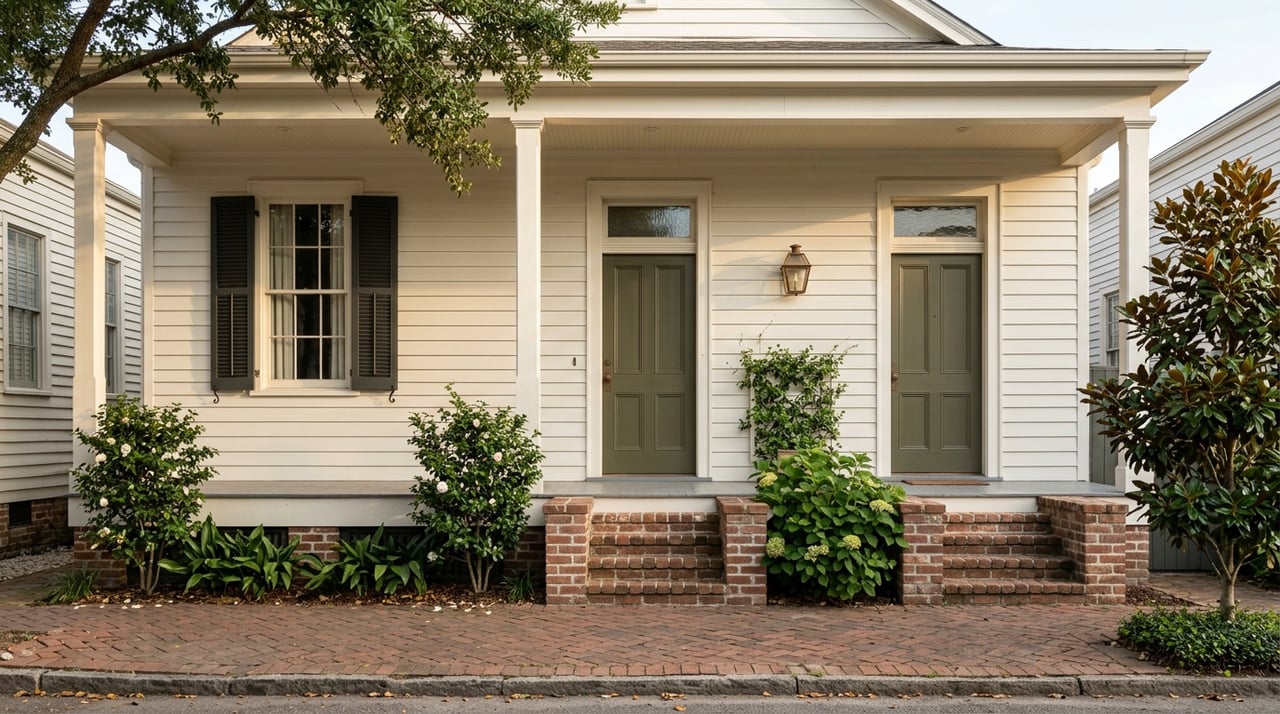
Historic housing is one of the biggest reasons buyers focus on Bywater and Marigny. In Bywater, the historic district is dominated by shotguns and Creole cottages, with single and double shotguns especially common. There are also some double-gallery houses and a smaller number of industrial and warehouse buildings near the river.
Marigny offers a similarly historic but slightly broader architectural mix. You will see Creole cottages, ornamented shotgun dwellings, two-story mixed-use corner buildings, and Queen Anne or Eastlake Victorian residences. If you are drawn to older homes with strong architectural identity, both neighborhoods have a lot to offer.
For buyers new to New Orleans housing types, local terminology matters. A shotgun double is a two-unit residence, which can be useful to understand when comparing properties. It is one more reason local guidance can make a big difference when you are evaluating options.
How the two housing markets differ
While the neighborhoods share a lot, the housing mix is not identical. Bywater has 2,569 housing units, with 79.0% occupied, and 56.7% of occupied units are owner-occupied. Marigny has 2,383 housing units, with 64.1% occupied, and 54.7% of occupied units are renter-occupied.
That helps explain why the neighborhoods can feel different on the ground. Bywater often reads as a bit more owner-residential, while Marigny can feel somewhat more rental-oriented and higher-turnover. Neither is one-note, but if you are deciding between the two, this is a useful lens.
What buyers should pay close attention to
Historic district rules matter
Both neighborhoods are historic districts, which means exterior changes visible from the public right-of-way may be subject to review by the Historic District Landmarks Commission. Marigny received protection through a special historic-preservation zoning ordinance in 1971, and the Bywater historic district was designated in 1993. If you are buying with renovation plans in mind, this is not something to leave for later.
The key takeaway is simple: check preservation rules early. If you wait until plans are complete, you may run into delays or revision needs. That is especially important for buyers considering exterior updates, additions, or visible design changes.
Flood review should be address-specific
In New Orleans, flood review should always be part of your due diligence. FEMA’s Flood Map Service Center is the official source for community flood-hazard maps, and flood risk can change over time. FEMA also notes that there is no true no-risk zone and that levees may reduce risk but do not eliminate flooding.
For you as a buyer, the practical takeaway is to verify the exact property address. One block’s flood profile should not be assumed to apply to the next. In neighborhoods with historic homes and varied elevations, address-level review matters.
Who tends to love these neighborhoods
Bywater and Marigny often appeal to buyers who want character woven into daily life. The combination of historic homes, mixed-use streets, arts presence, and strong work-from-home or short-trip patterns can be especially attractive if you want your neighborhood to do more than just provide a place to sleep. These areas tend to suit people who value atmosphere, architecture, and a sense of place.
The education and commute patterns in the Data Center profiles also support the idea that both neighborhoods attract many remote workers and creative professionals. Marigny’s 2020 to 2024 ACS profile shows 39.5% of adults with a bachelor’s degree and 24.6% with a graduate or professional degree, while Bywater shows 26.6% and 23.4%, respectively. Those numbers are not the whole story, but they do align with the neighborhoods’ creative and flexible lifestyle reputation.
Bywater vs. Marigny quick comparison
| Feature | Bywater | Marigny |
|---|---|---|
| Overall feel | Quieter, more residential, more local-oriented | Denser, more social, more entertainment-oriented |
| Street life | Corner stores, neighborhood restaurants, local bars | Music venues, cafés, restaurants, active foot traffic |
| Green space | Crescent Park riverfront access | Washington Square Park |
| Housing feel | Slightly more owner-residential | More renter-oriented overall |
| Architecture | Shotguns, Creole cottages, some industrial conversions | Creole cottages, shotguns, mixed-use buildings, Victorian styles |
The bottom line
If you want a neighborhood that feels a little quieter, more residential, and strongly local, Bywater may be the better fit. If you want denser street life, easy access to music and nightlife, and a more social day-to-day atmosphere, Marigny may feel more natural. Both offer historic housing, riverfront access, and a creative identity that is hard to replicate elsewhere in New Orleans.
The right choice comes down to how you want your home and neighborhood to work together. If you are comparing properties in Bywater, Marigny, or other New Orleans neighborhoods, working with someone who understands both the lifestyle and the due diligence can make the process much smoother. If you’re ready to talk through your options, connect with Allison Vencil (AI Assistant).
FAQs
What is the difference between living in Bywater and living in Marigny?
- Bywater generally feels quieter, more residential, and more locally oriented, while Marigny usually feels denser, more social, and more centered around music, dining, and nightlife.
Is Bywater or Marigny more walkable for daily life?
- Both neighborhoods support short trips well, with higher shares of walking, biking, and working from home than Orleans Parish overall, though most households still keep at least one vehicle.
What kinds of homes are common in Bywater and Marigny?
- Both neighborhoods are known for historic housing, including shotguns and Creole cottages, while Marigny also has more two-story mixed-use buildings and Victorian-style homes.
Do buyers in Bywater and Marigny need to check historic district rules?
- Yes, because both are historic districts and exterior work visible from the public right-of-way may require review, so renovation plans should be checked early.
Should buyers review flood maps for homes in Bywater and Marigny?
- Yes, flood review should be part of any purchase decision in New Orleans, and the safest approach is to verify the exact property address rather than assume nearby blocks share the same flood profile.