Looking for investment property opportunities in Covington, LA? You are not alone. Covington offers a small-city footprint, a well-known downtown, and a broader St. Tammany Parish demand base that can make it appealing for investors who want more than a one-size-fits-all rental play. If you are thinking about buying here, it helps to understand where the opportunities may be, what local rules can affect your numbers, and which details deserve extra due diligence before you move forward. Let’s dive in.
Why Covington draws investor attention
Covington is a relatively small city, with an estimated 11,721 residents and 4,390 households as of July 1, 2025. At the same time, it sits within St. Tammany Parish, which is much larger at 279,108 residents. That combination matters because you are looking at a compact local market that still benefits from wider parish demand.
The city also shows a mix of ownership and rental activity. The owner-occupied housing rate is 69.7%, and the median gross rent is $1,396. Median household income is $75,851, which helps frame the local renter and buyer pool when you start evaluating monthly payment tolerance, rent levels, and property positioning.
Recent data suggests an active market rather than a runaway one. The St. Tammany assessor reports that home prices have remained strong since the 2020 reassessment, while spring 2026 platform estimates place Covington sale prices around $317,000 to $324,000 and average rent around $1,495. Those sale and rent figures are best treated as directional, not exact underwriting comps.
Covington’s size shapes opportunity
Covington covers about 8.02 square miles. In a compact city like this, location details can matter a lot from one block to the next. That is one reason small-parcel, infill, and adaptive reuse opportunities can carry more weight here than they might in a larger suburban market.
You are not just choosing a city. You are choosing a zoning context, a street pattern, a flood profile, and in some cases a historic review environment. In Covington, those factors can affect both your strategy and your timeline.
Property types worth exploring
Covington’s zoning map supports a wide range of property types. Districts include single-family, two-family, three- and four-family, multifamily, commercial, office, neighborhood commercial, regional commercial, medical service, open space, light industrial, and planned residential.
That range gives you several possible directions to explore depending on your goals. For example, you might look at a conventional single-family rental, a small multifamily property, a mixed-use building, or a selectively located office or commercial holding. The best fit depends on your budget, risk tolerance, and how hands-on you want to be.
Single-family and planned residential plays
If you want a more familiar investment path, single-family and planned residential areas may offer the clearest starting point. These parts of Covington are generally more aligned with conventional long-term rentals.
Demographics suggest there is not just one renter profile in the city. About 23.5% of residents are under 18, 18.7% are 65 or older, and the average household size is 2.45 people. That points to mixed housing demand, including households looking for practical long-term living arrangements and others seeking a lower-maintenance fit.
Small multifamily opportunities
Because Covington includes two-family, three- and four-family, and multifamily zoning districts, smaller-scale multifamily can also be part of the conversation. These properties may appeal if you want multiple income streams from one address.
That said, small multifamily deals still require close review. Zoning, insurance, taxes, and renovation needs can all shift the numbers quickly. In a market this compact, the property-level details often matter more than the headline category.
Mixed-use and downtown assets
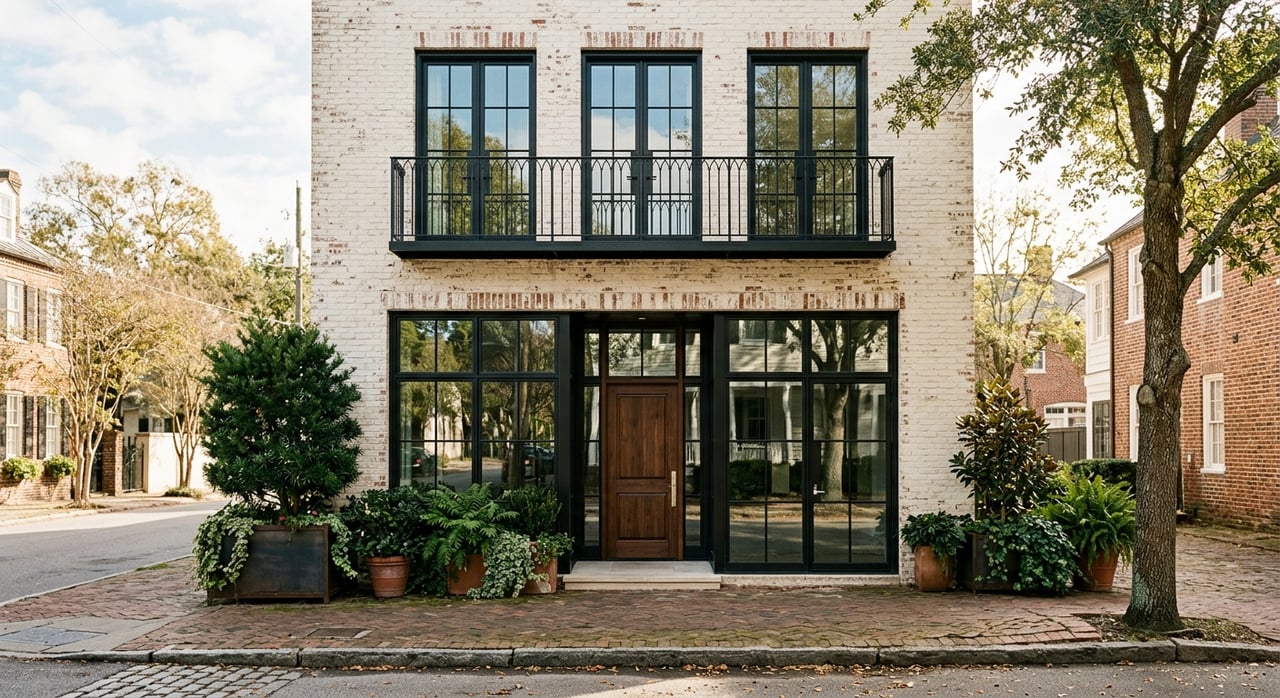
Downtown Covington stands out for investors who want something more flexible or character-driven. The Historic Downtown Covington mixed-use overlay covers roughly 45 square blocks and is designed to combine residential uses with small-scale commercial, service, and office uses.
This area may fit an investment thesis built around adaptive reuse, live-work space, boutique office, or small retail with residential potential. Official city materials also point to a downtown environment with boutiques, galleries, specialty shops, restaurants, and more than 100 live music performances annually. For some buyers, that kind of setting supports long-term value by creating a strong sense of place.
What makes downtown underwriting different
Downtown Covington has some unusually important code features for investors. In the mixed-use overlay, there is no minimum lot area for nonresidential lots, retail establishments are capped at 5,000 square feet, and commercial establishments in the Division of St. John have no off-street parking requirement.
Those details can create opportunity, especially on smaller or irregular parcels. But they do not remove the need for parcel-level review. Residential uses and bed-and-breakfast uses have their own lot-area and lot-width rules, so it is important to verify what is allowed before you build your budget around a future use.
The overlay also makes clear what the city is not aiming to support in the historic core. Industrial and manufacturing activity, along with large-scale repair uses, are prohibited, and drive-through food service is tightly controlled. In practical terms, downtown is better suited to smaller-scale, design-conscious uses than heavier commercial concepts.
Know the historic district review process
If a property is in the historic district, your renovation timeline may look different than it would elsewhere. The Covington Historic District Commission reviews proposed construction, material alteration, demolition, and relocation. It also issues Certificates of Appropriateness for approved work.
That does not mean historic properties are a bad investment. It simply means you should plan for another layer of review that can affect cost, timing, and design flexibility. If you are considering a rehab, this step belongs near the top of your due diligence list.
Likely tenant demand in Covington
St. Tammany Parish’s major employment sectors include retail trade, healthcare, and professional and corporate services. Major employers include Ochsner Health, St. Tammany Health System, Lakeview Regional Medical Center, Gilsbar, POOLCORP, Globalstar, Tulane National Primate Research Center, AVALA, and logistics and distribution firms.
Based on that employer mix, likely tenant demand may include healthcare employees, office and technical professionals, logistics workers, and service-sector households. That can help you think through floor plans, commute convenience, and whether a property is better suited to a practical long-term renter or a more location-driven resident.
In the downtown core, some renters and buyers may place a premium on walkability, character, and proximity to local businesses and events. In more residential sections of Covington, the appeal may center more on traditional neighborhood layouts and long-term occupancy patterns. Neither approach is automatically better. The key is matching the property to the demand profile around it.
Taxes can change your returns
Property taxes in St. Tammany Parish deserve close attention because they are not uniform. The assessor’s 2024 report says the parish ranked 9th highest statewide in weighted average millage at 130.7 mills, and the same house can be taxed very differently depending on district.
For investors, this means you should avoid broad tax assumptions. A deal that looks workable at one tax level may feel very different after you confirm the actual district millage. It is especially important when you are comparing two properties with similar prices but different locations.
Model homestead and non-homestead separately
Louisiana assesses land and residential improvements at 10% of fair market value, while commercial property is assessed at 15%. In St. Tammany, the homestead exemption applies only to a primary residence, does not transfer to a new property, and no one may claim more than one homestead exemption.
That matters because rentals and second homes generally should not be underwritten as homestead-eligible. The assessor also states that the homestead exemption saves the average homeowner about $1,000 annually. If you are comparing owner-occupied and investment scenarios, keep those models separate.
Another local detail matters around timing. During open-roll periods, current tax figures are estimates based on the prior year’s millage until official rates are set later in September. If you are closing or planning renovations during that window, treat tax numbers as provisional.
Flood risk and insurance need parcel-level review
Flood due diligence is a major part of buying in Covington. The city participates in the National Flood Insurance Program and notes that new construction and substantial improvements in the floodplain must be elevated to base flood elevation under 44 CFR.
For investors, flood zone, elevation, lender requirements, and insurance costs can all change the total cost of ownership. Two properties with similar purchase prices may carry very different monthly risk profiles once insurance is added.
Covington also states that policy owners receive a 10% discount because the city participates in the NFIP Community Rating System. That is helpful, but it should not replace a property-specific insurance review. You still want to verify flood maps, elevation factors, and quote assumptions before finalizing your numbers.
A local tax incentive to ask about
Louisiana’s Restoration Tax Abatement program may be relevant if you are considering a qualifying renovation. The program can provide up to a 10-year ad valorem tax abatement on renovations to existing commercial structures and owner-occupied residences in qualifying districts, including downtown development districts and historic districts.
This is not automatic, and acquisition cost is not eligible. In other words, you should confirm eligibility early and not build a deal around an assumed tax benefit. When it applies, though, it can be an important part of the conversation for the right project.
A smart due diligence checklist
Before you move forward on an investment property in Covington, make sure your process is disciplined. A practical checklist includes:
- Verify zoning and permitted use
- Review flood maps and elevation requirements
- Confirm whether the property is in a historic district
- Model property taxes based on the correct district
- Get insurance quotes early
- Review the deal structure with a CPA or real estate attorney before contract or construction begins
In Covington, the best opportunities often come down to preparation. A promising property can lose its shine quickly if you miss a zoning rule, underestimate insurance, or assume a tax treatment that does not apply.
How to think about the best fit
If you want simplicity, a conventional residential rental may offer the easiest path to stable underwriting. If you want flexibility and are comfortable with more detailed review, a mixed-use or historic-core property may offer a more distinctive opportunity.
The right choice depends on your goals. Some investors care most about straightforward long-term income. Others want future optionality, redevelopment potential, or a property that blends residential and commercial value. Covington can support several of those strategies, but success usually comes from matching the property to the city block, not just the city name.
If you are weighing investment property opportunities in Covington, LA, a calm, well-researched approach can help you move with more confidence. For local guidance on residential, commercial, investment, rental, land, and select multifamily opportunities across the Northshore, connect with Allison Vencil (AI Assistant).
FAQs
What makes Covington, LA attractive for investment property?
- Covington offers a compact city footprint, a broader St. Tammany Parish demand base, mixed zoning districts, a notable downtown core, and housing demand that appears to support more than one investment strategy.
What property types can you explore in Covington, LA?
- Based on the city zoning map, you can explore single-family, two-family, three- and four-family, multifamily, office, commercial, medical service, and some mixed-use opportunities depending on the parcel and district.
What should you know about downtown Covington investment property?
- Downtown Covington includes a mixed-use overlay that supports residential with small-scale commercial, service, and office uses, but parcel rules, use limitations, and historic review can all affect feasibility.
How do property taxes affect Covington, LA investment property?
- St. Tammany property taxes vary by district, homestead treatment generally does not apply to rentals or second homes, and commercial property is assessed differently than residential property, so tax modeling should be property-specific.
Why is flood review important for Covington investment property?
- Flood zone, elevation, insurance cost, and lender requirements can materially affect your total ownership cost, and substantial improvements in the floodplain may trigger elevation requirements.
Is there a renovation tax incentive for Covington properties?
- Louisiana’s Restoration Tax Abatement program may offer up to a 10-year ad valorem tax abatement on qualifying renovations to existing commercial structures and owner-occupied residences in eligible districts, but eligibility must be confirmed in advance.