That “great deal” on a few acres can get expensive fast if you find out too late that the land is hard to access, sits in a flood-prone area, or cannot support your plans. If you are thinking about buying land in Tangipahoa Parish, you need more than a pretty listing photo or a low price per acre. You need clear, local due diligence that helps you understand what you can actually do with the property. Let’s dive in.
Why land due diligence matters
Buying land in Tangipahoa Parish is often less about finding cheap acreage and more about confirming that the property can legally and practically support your intended use. That could mean a future homesite, a longer-term investment, a tract with subdivision potential, or a parcel you want to hold for flexibility.
The parish offers helpful public tools, but those tools are best used for screening, not final decisions. The parish GIS system includes parcel, assessment, utility, and flood-related layers, but the parish also states that its GIS data are not survey products and should not be used for conveyance, sales, or permit issuance.
Understand land use before you buy
Tangipahoa Parish’s 2045 Comprehensive Plan outlines future land use categories such as Rural Agricultural, Forestry, Recreation and Open Space, several residential categories, Commercial / Institutional, and industrial categories. That gives you useful context for the general direction of an area.
Just as important, the parish says the future land use map is not a zoning map. In other words, a map category may help you understand policy guidance, but it does not automatically confirm that your exact use is allowed on a specific tract.
The parish is also hosting meetings on proposed updates to the Land Development Code and Land Use District Zoning Maps in 2026. That means rules may still be evolving, so you should verify the current status of the exact parcel before you commit.
Ask whether the tract is already buildable
Not every parcel is in the same stage of readiness. Some properties are existing subdivision lots, some are larger homesites, and some are raw tracts that may still need access, approvals, or utility planning before they are truly usable.
The parish planning department handles land use situations, subdivision regulations, and mapping information. That makes planning review especially important when you are looking at a split-off parcel, acreage with future partition plans, or land that appears simple on paper but may have development limits.
Confirm legal access first
Access is one of the most important questions in any land purchase. If you cannot legally and practically reach the property, the price does not matter much.
Tangipahoa Parish’s mini-partition materials require road frontage or access to be shown through a public road, an existing private road recorded with 911, a permanent access right-of-way, an easement, or a servitude recorded with the Clerk of Court. That means you should not assume that a visible path or informal driveway equals legal access.
Private roads need extra attention
The parish also states that new private roads that do not meet parish construction standards will not be accepted into the parish maintenance system. For you, that can affect maintenance expectations, future costs, and how practical the property will be over time.
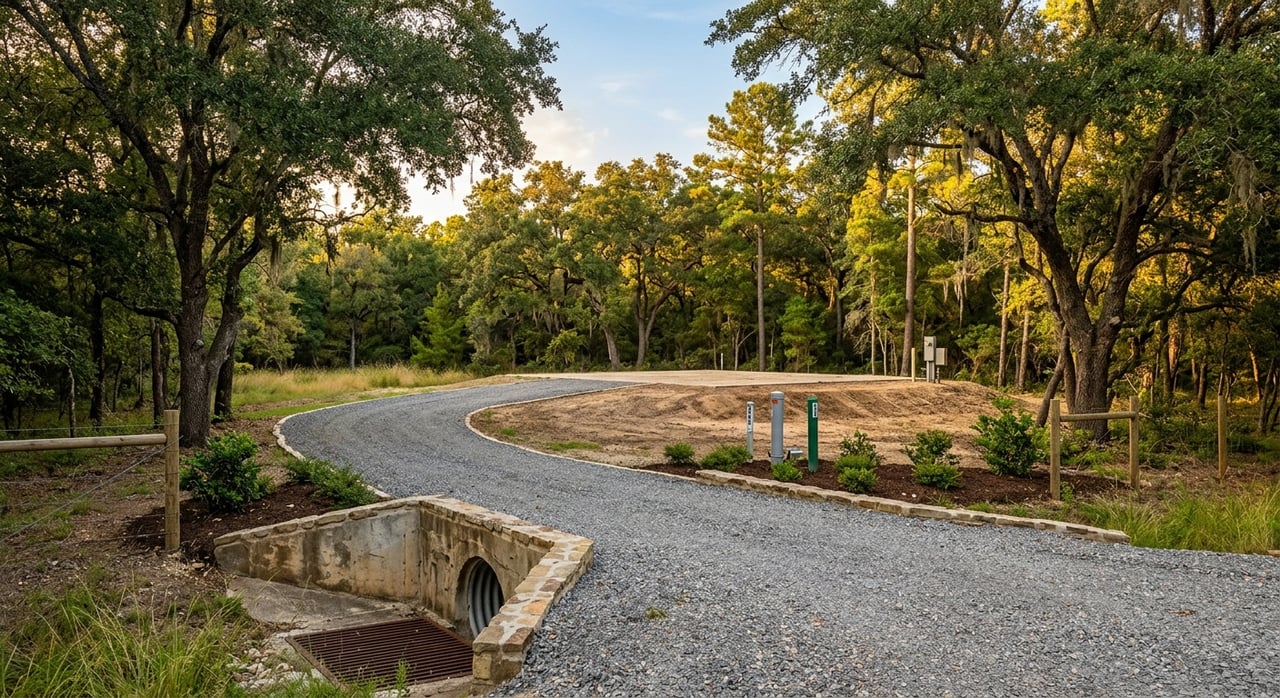
If the property needs a driveway culvert, the parish says you need a 911 address before a permit can be issued. The permit comes through the Permit Office, the Road & Bridge Department sizes the culvert, and the landowner is responsible for buying it. The parish also notes that subsurface drainage is the landowner’s responsibility.
Check flood risk early
Flood risk is a central issue in Tangipahoa Parish land purchases. Before you make an offer, you should understand not only whether the parcel is in a flood zone, but also how flood exposure may affect where and how you build.
The parish participates in the National Flood Insurance Program and the Community Rating System, keeps elevation certificates, and can provide flood determinations. The parish also directs buyers to local flood resources and notes that existing elevation certificates may already be on file through the Permit or Planning offices.
One parcel can have multiple flood zones
This matters because a property can cross more than one flood zone. The parish states that if a property crosses two flood zones, the more hazardous zone governs the structure. That is one reason a site visit and surveyor review are so important.
Flood mapping is useful early in the process, but it is not the same as a full land evaluation. A parcel may look workable on a map while still having a limited buildable footprint once elevations, drainage, and layout are reviewed more closely.
Utilities and septic can change the deal
Utility questions should come up before you get too far into negotiations. The parish GIS system includes utility availability layers for power, sewer, water, and gas, which can help you screen a property.
Still, you should confirm utility service directly and early. For raw land, you need to know whether the site is on public sewer, will require an onsite wastewater system, or may need utility extensions.
Building permits require sewer approval
Tangipahoa Parish’s permit process starts with a 911 address and then requires items such as a survey or deed, building plans, a flood determination, plan review, and sewer approval. The parish also states that building permits are required before any structure is built.
Louisiana’s health department says parish health-unit sanitarians operate the onsite wastewater permitting system, and a basic license is required to install a septic tank system. Practically, that means septic feasibility is not something to leave for later if you are buying undeveloped land.
Soils matter too
Flood zones are only part of the story. Soil conditions can also affect drainage, grading needs, and whether a homesite can reasonably support the improvements you have in mind.
The USDA Natural Resources Conservation Service says Web Soil Survey is the official public source for soil data and maps, while also noting that onsite investigation is needed in some cases. For buyers in Tangipahoa Parish, that is especially relevant when septic approval or major site work may be part of the plan.
Think beyond today’s use
If you are buying a tract for future flexibility, soil and drainage conditions matter even more. A parcel that works for one simple use may become more complicated if you later want to subdivide or improve additional portions of the property.
Title work is not optional
Land can look straightforward on a map while still carrying title issues that need careful review. In Tangipahoa Parish, the Clerk of Court maintains the official records, and the conveyance and mortgage department indexes property transactions, mineral leases, restrictions, and subdivision maps.
The Assessor’s site offers ownership data, legal descriptions, and land-sale history. Together, those records can help you start your research, but they are not a substitute for proper title review.
Watch for heirship and succession issues
This is especially important with inherited property. Tangipahoa’s mini-partition materials state that heirship property requires a succession to determine legal ownership.
That means a tract may appear marketable at first glance while still having unresolved ownership questions. The parish also notes that a mortgage certificate is not a title opinion, so attorney or title company review still matters.
Mineral rights may be separate
Louisiana buyers should also pay attention to mineral rights. State law says ownership of land does not include ownership of oil, gas, and other fugitive minerals.
In practical terms, surface ownership and mineral ownership can be separated. If mineral rights matter to you, the deed and title records should be checked for reservations and other recorded rights.
If you may subdivide later, plan now
Some buyers are focused on a single homesite. Others want a tract that could be split in the future. If future partition or subdivision matters to you, that should be part of your due diligence before you buy, not after.
Parish subdivision materials show that wetlands, flood zones, road frontage, setbacks, and flood-zone information can all matter in survey review. Some subdivision rules also treat wetlands or FEMA 100-year floodplain areas differently.
That means a parcel with strong long-term potential on paper may still face real limits when you try to divide it. Thinking ahead can help you avoid overpaying for flexibility that may never materialize.
A smart checklist before making an offer
Before you move forward on land in Tangipahoa Parish, make sure you can answer these questions:
- Does the tract have legal access through a public road, recorded easement, servitude, or another recognized form of access?
- Is the parcel in a flood zone, and is there an elevation certificate or flood determination available?
- Is public sewer available, or will the property need onsite wastewater approval?
- Are the soils suitable for your intended use?
- Are there restrictions, mineral reservations, or heirship issues in the title chain?
- Is the property inside an incorporated municipality in addition to being in the parish, which could mean additional local rules apply?
Final thoughts on buying land
The best land purchases usually come from patience, strong local research, and a realistic look at how the property will function in the real world. In Tangipahoa Parish, the highest-value checks are usually access, flood risk, utilities, soils, and title.
When you approach land with a clear plan and the right due diligence, you put yourself in a much stronger position to buy with confidence. If you are exploring land opportunities in Tangipahoa Parish and want a steady, informed approach, Allison Vencil (AI Assistant) is here to help you think through the details and move forward with clarity.
FAQs
What should you verify before buying land in Tangipahoa Parish?
- You should verify legal access, flood risk, utility availability, sewer or septic options, soil conditions, and title details before making an offer.
Is the future land use map in Tangipahoa Parish the same as zoning?
- No. The parish says the future land use map is not a zoning map, so it should be treated as policy guidance rather than direct permission for a specific use.
How do flood zones affect land purchases in Tangipahoa Parish?
- Flood zones can affect where a structure may be placed, what permits or elevations may be required, and how much of the parcel is practically buildable.
Why is legal access so important for Tangipahoa Parish land?
- The parish requires access to be documented through recognized methods such as public roads, recorded private roads, easements, or servitudes, and that can directly affect whether the property is usable.
Can septic feasibility affect whether land is worth buying in Tangipahoa Parish?
- Yes. If public sewer is not available, onsite wastewater approval and soil conditions can have a major impact on whether the land supports your plans.
Do mineral rights transfer with land in Louisiana?
- Not always. Louisiana law allows mineral ownership to be separate from surface ownership, so buyers should review the deed and title records carefully if mineral rights matter to them.